
Design Guides
Marble or Porcelain? Choosing the Right Finishes for Kitchens and Bathrooms
It is the decision almost every kitchen and bathroom project in Dubai reaches: the natural beauty of marble, or the practical strength of porcelain that can now imitate it remarkably well. Choosing interior design materials in Dubai is not about picking a winner in the showroom. It is about matching each material to the surface it will live on — how much water, heat, acid and daily traffic that surface will actually see — and to the level of care you are honestly willing to give it.
This guide compares marble and porcelain where it matters most: kitchen worktops, splashbacks and floors, and bathroom floors, shower walls and vanity tops. The answer is rarely one material for the whole home. In most well-planned projects, it is both — each used where it performs best.
What each material actually is
Marble is a natural stone, formed from limestone under heat and pressure. Every slab is unique: the veining, the soft movement of colour and the depth you see in real marble cannot be perfectly repeated, which is exactly why people choose it. It is also a calcium-based stone, and that chemistry explains both its character and its limits — it is porous, relatively soft, and sensitive to acids.
Porcelain is a manufactured material: refined clay and minerals fired at very high temperatures until it becomes extremely dense. Good porcelain absorbs almost no water, does not need sealing, and is printed or coloured to imitate stone, including convincing marble and travertine effects. Large-format porcelain slabs and tiles also mean fewer grout lines and a calmer, more continuous surface — a quality many Dubai interiors now rely on.
The five differences that decide the choice
1. Water and stains
Marble absorbs liquid if it is left to sit. Coffee, oil, coloured toiletries and hard-water marks can stain it, which is why marble must be sealed on installation and re-sealed periodically, and why spills should be wiped promptly. Sealing slows absorption; it does not make the stone stain-proof. Porcelain, by contrast, is effectively non-porous: water and most household liquids stay on the surface and wipe away. Only the grout needs attention. In a family bathroom or a busy kitchen, that difference is felt every week.
2. Acids and etching
This is the difference homeowners underestimate most. Lemon juice, vinegar, tomato, many cleaners and even some cosmetics can etch marble — a dull mark where the acid has reacted with the surface. Etching is not a stain and cannot be wiped off. Porcelain does not etch in normal household use, which is why it is so forgiving around cooking and daily bathroom routines. If you love marble on a kitchen worktop, go in expecting a living surface that will develop a soft patina over time; if you want the surface to look exactly as installed for years, porcelain is the safer promise.
3. Heat, scratches and daily wear
Both materials handle heat well compared with many alternatives, though trivets remain sensible practice on any worktop. For scratches and wear, porcelain is harder and more resistant, which suits kitchen floors, entrance-to-kitchen routes and family bathrooms where sand and grit are walked in — a real factor in Dubai homes. Marble is softer, can show scratching and edge chips more readily, and polished marble floors can be slippery when wet. A honed or lightly textured finish improves grip and hides small marks better on either material, and is usually the wiser choice for bathroom floors.
4. Consistency and repair
With marble, you select a specific slab and live with its natural variation — that uniqueness is the point, but it also means a replacement piece years later will never match exactly. Porcelain is consistent from piece to piece, so a large floor or a full shower enclosure reads evenly, and a spare tile kept from the original batch is a true match. Porcelain has its own caution: the pattern on most marble-look porcelain is a surface design, so a deep chip can reveal the body beneath, and large slabs need skilled handling and cutting. Quality of installation matters for both materials — a beautiful finish on a poorly prepared base will still fail, which is why material choice and fit-out execution should be planned together.
5. Care you will actually do
Be honest here, because this decides more projects than appearance does. Marble asks for pH-neutral cleaners, prompt wiping and periodic re-sealing. Porcelain asks for ordinary cleaning and grout care. Neither is difficult, but they are different commitments. The right question is not which material is better — it is which routine fits your household, your staff and the way the room is used.
In the kitchen: decide surface by surface
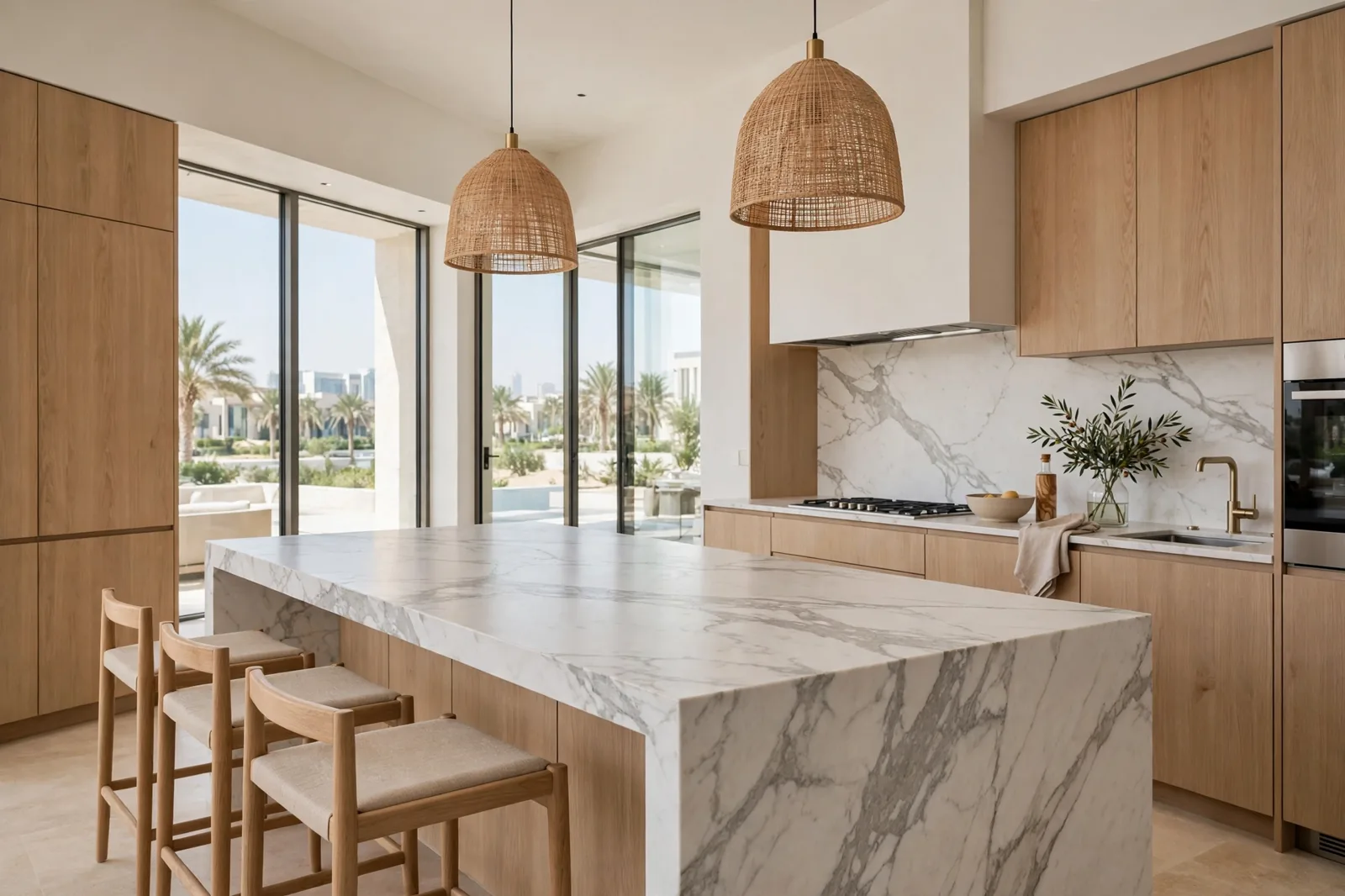
Worktops and islands. A marble island is a genuine centrepiece, and in a show kitchen or a home where cooking is light, it can be the right choice — especially in a honed finish, which hides etching better than a high polish. In a working family kitchen, where lemon, oils and hot pans are daily events, large-format porcelain gives the stone look with far less anxiety, and keeps its appearance with minimal care. Many clients use both: porcelain for the working counters, marble reserved for a serving or display surface.
Splashbacks. Both work well. Marble brings natural depth behind a hob or sink, provided it is sealed and you accept gentle patina near the cooking zone. Porcelain in one large piece removes grout lines behind the hob entirely, which is both a visual and a cleaning advantage.
Floors. Porcelain is the default recommendation for most Dubai kitchens: hard, stain-resistant, available in large formats that suit open-plan spaces, and untroubled by tracked-in sand. Marble floors are beautiful in lower-traffic kitchens, but they need the sealing routine and a finish chosen for grip.
In the bathroom: wet zones change the answer
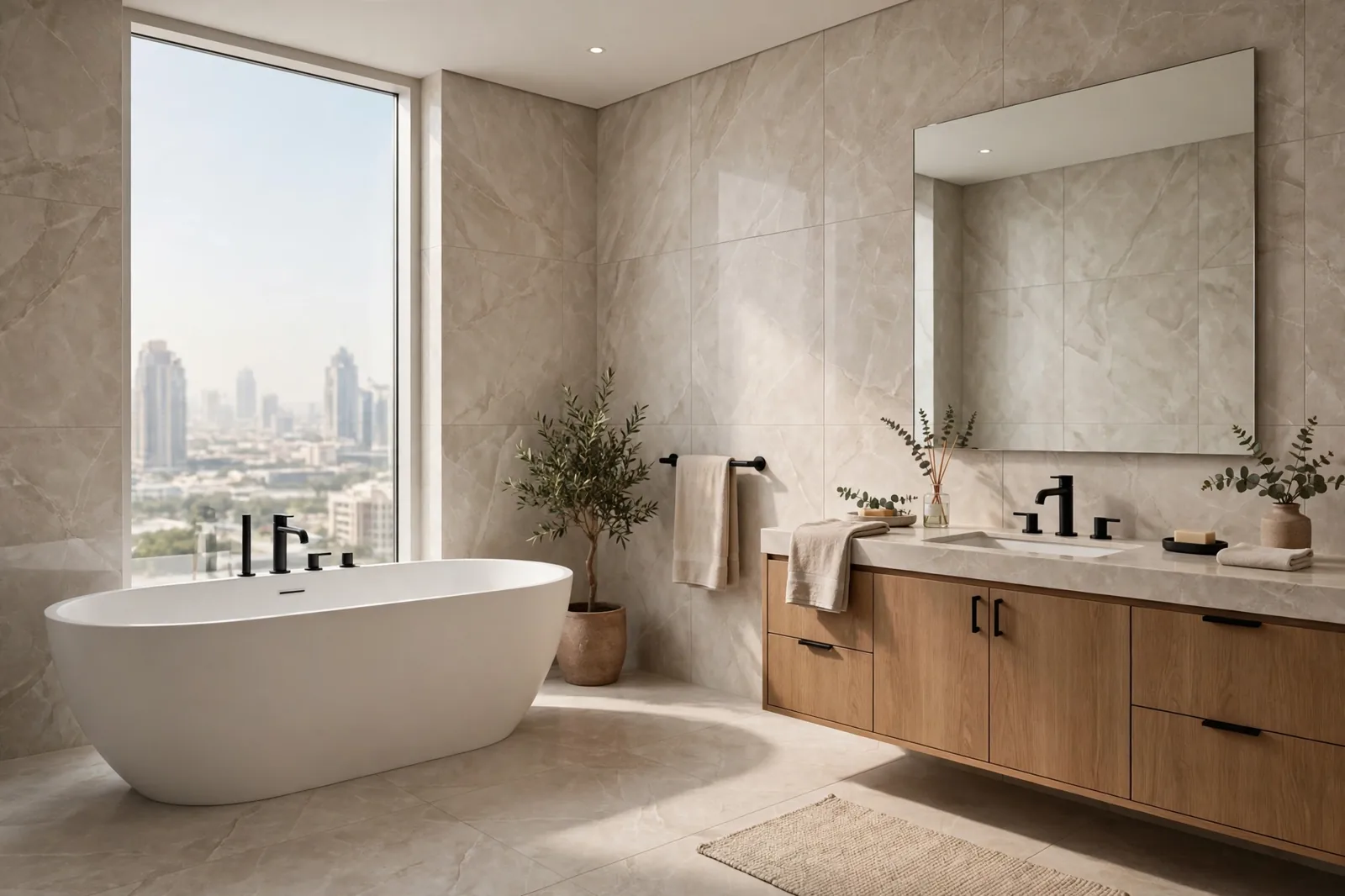
Shower walls and floors. This is porcelain’s strongest ground. Constant water, soap and shampoo, and the need for reliable slip resistance all favour a dense, non-porous tile. Marble can be used in showers, but it demands sealing discipline and can react to some toiletries and cleaners; it is better reserved for a feature wall outside the direct wet zone, where its veining can be enjoyed without constant exposure. Thoughtful interior design planning makes that distinction early, before tiles are ordered.
Bathroom floors. Choose a matte or textured finish in either material. Large-format porcelain keeps grout — the part that discolours first — to a minimum. If you choose marble, honed is safer and more forgiving than polished.
Vanity tops. A marble vanity top is a classic luxury detail and works well in a guest or powder bathroom with lighter use. In a main family bathroom, where toothpaste, perfume and cosmetics meet the surface daily, porcelain or a marble-look slab protects the investment while keeping the same visual language. Our room-by-room guide to apartment interior design in Dubai shows how this surface-by-surface thinking applies across a whole home.
What Dubai’s climate adds to the decision
Dubai adds three pressures. First, strong daylight: it reveals every etch and stain more honestly than showroom lighting, and it can fade some materials over time — porcelain’s colour is notably stable in bright rooms. Second, humidity and constant air-conditioning: bathrooms stay damp longer, which rewards non-porous surfaces and good ventilation detailing. Third, fine sand: it is an abrasive that tests floor finishes daily. Our guide to designing for Dubai’s climate covers how these factors shape wider material choices. None of this rules marble out — marble has been used in this region for generations — but it does mean marble should be placed deliberately, not by default on every surface.
A simple way to decide
Ask four questions for each surface. How wet will it get, and how often? Will acids, oils or cosmetics touch it daily? How much traffic and grit will it take? And who will maintain it, and how? If the answers point to constant water, daily acids and heavy use, choose porcelain. If the surface is primarily visual — a feature wall, a powder-room vanity, a low-traffic island you will care for — marble earns its place. Then check the combination together: the best Dubai kitchens and bathrooms often pair a real marble moment with porcelain everywhere the work happens, so the room feels luxurious and lives easily. You can see how material threads run through completed homes in our project portfolio.
Choose the finish for the life, not just the photograph
Marble offers something no manufactured material fully reproduces: natural depth and a surface that is entirely your own. Porcelain offers freedom from worry in exactly the rooms that punish a finish hardest. Neither choice is a compromise when it is made surface by surface, with the room’s real use in mind. Decide that way, and your kitchen and bathroom will still look considered — and be easy to live with — years after the renovation dust has gone.
If you are choosing finishes for a kitchen or bathroom renovation and would like help matching materials to each surface — design, specification and execution together — Space & Design Interior Decoration LLC can help. Design With Purpose. Built With Precision. Tell us about your project via our contact page and our team will discuss the right next step.