Design Guides
How to Select the Right Curtains for Large Villa Windows
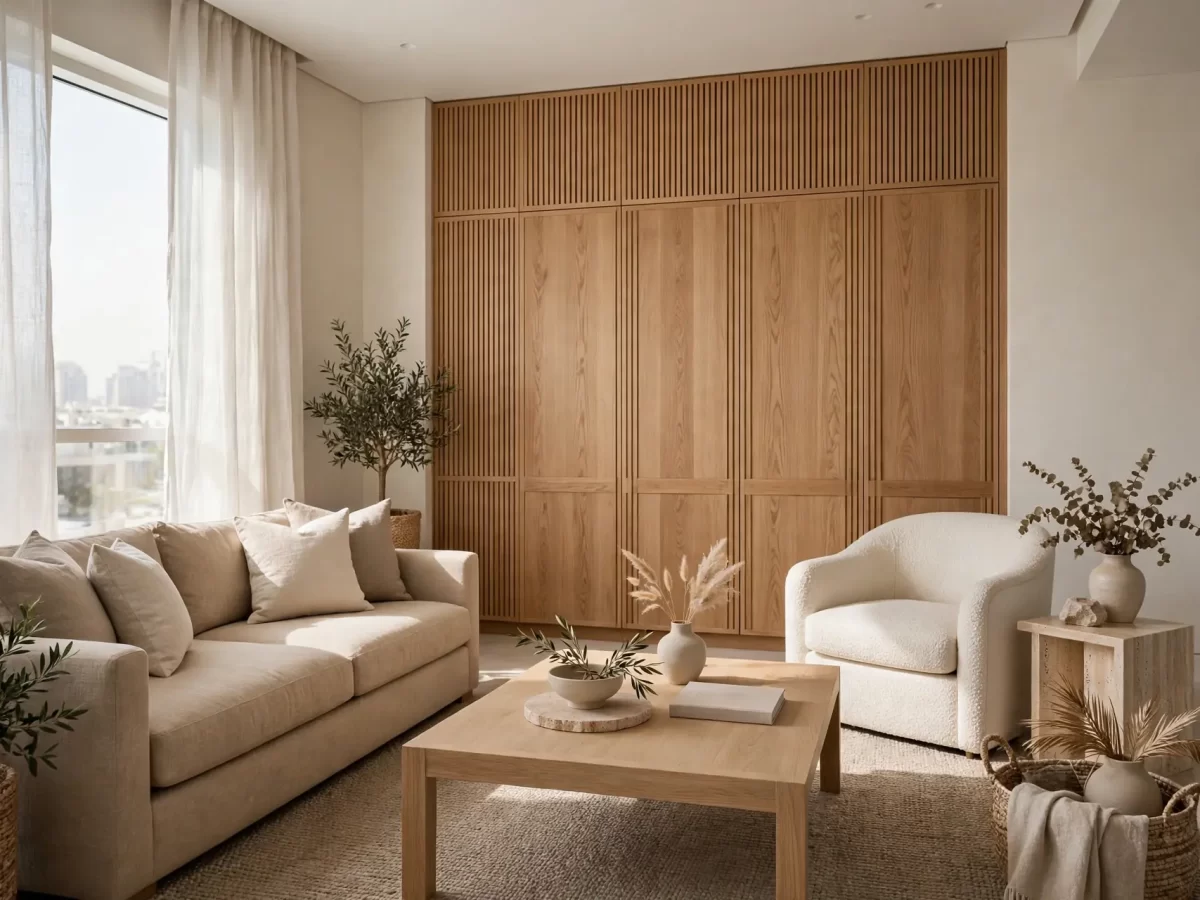
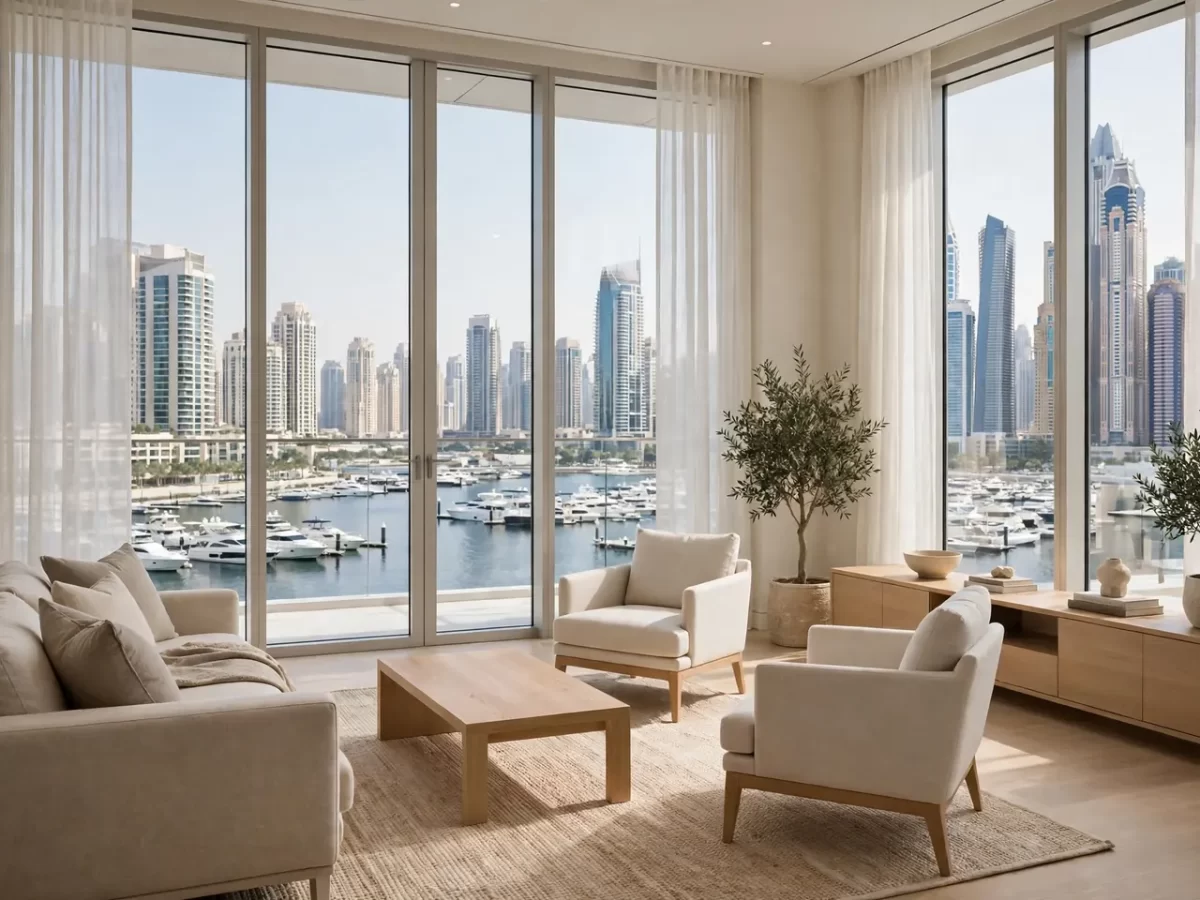
Large windows are the reason many Dubai villas feel so good to live in — and the reason their living rooms glare at noon, overheat by afternoon and sit on display after dark. Curtains are the working part of that glass: chosen well, they soften the light without losing it, close the room down at night and make a tall window look deliberate rather than exposed. Chosen badly — too little fabric, the wrong track, a sheer asked to do a blackout’s job — they are the most visible disappointment in the house, because on a large window a mistake has nowhere to hide. This guide works through the decisions in order: what the window has to do, the layers, the track, the fabric, and only then the colour.
Start with the window, not the fabric
Before looking at a single sample, answer three questions about each large window. Which way does the glass face? West- and south-facing windows take hours of direct afternoon sun and need real light and heat control; east-facing bedrooms take the early sunrise; a shaded window may need privacy and softness only. What happens in the room — sleeping, watching screens, formal receiving? And what must the curtain protect: privacy from a neighbouring villa or the road, furniture and flooring from fading, or simply the view, which should survive the treatment rather than be replaced by it?
This is the same principle behind designing for Dubai’s climate generally: here, a window treatment is a piece of climate equipment that also has to look beautiful, and it should be specified from the start of an interior design scheme, not bought at the end of one.
Two layers do what one curtain cannot
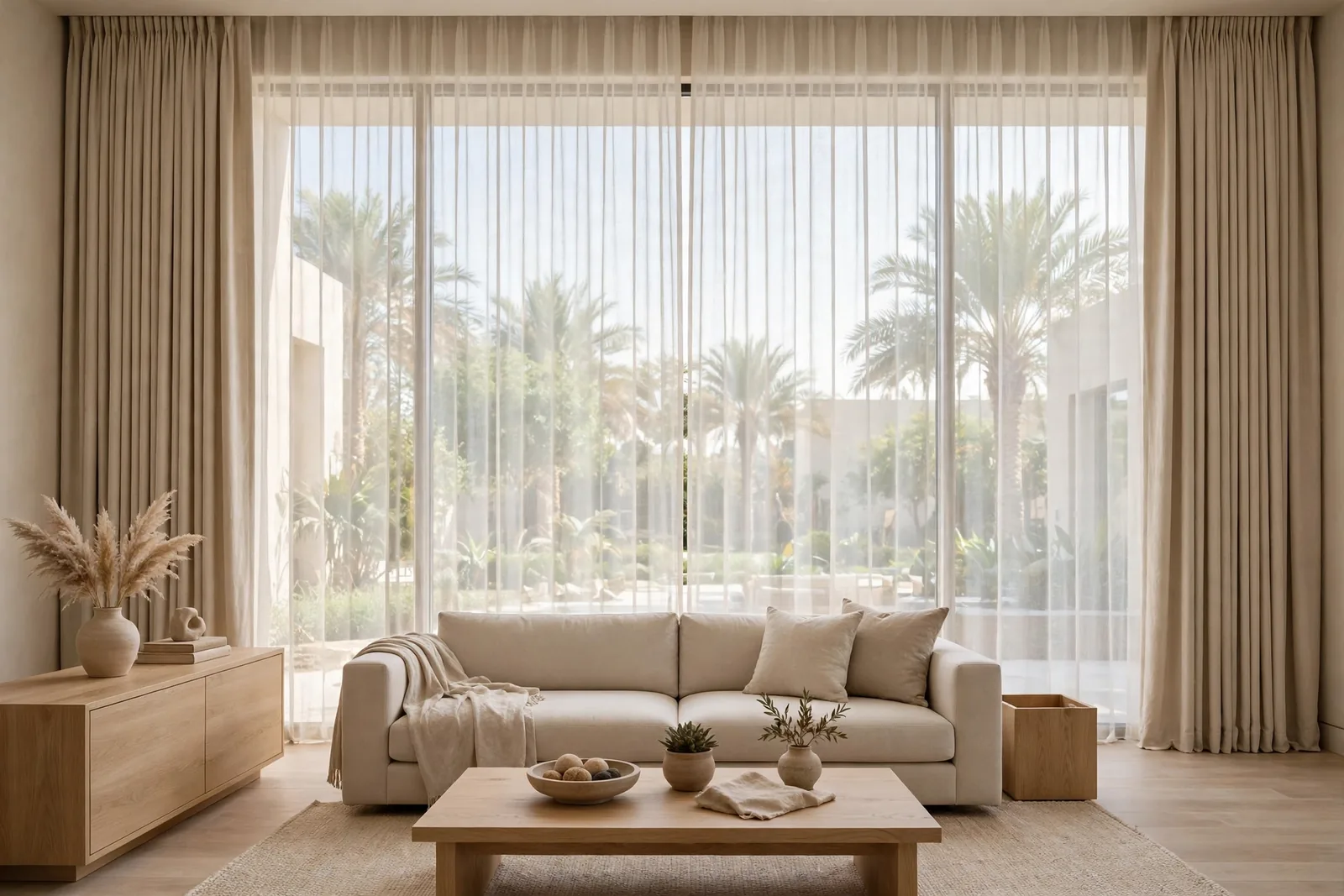
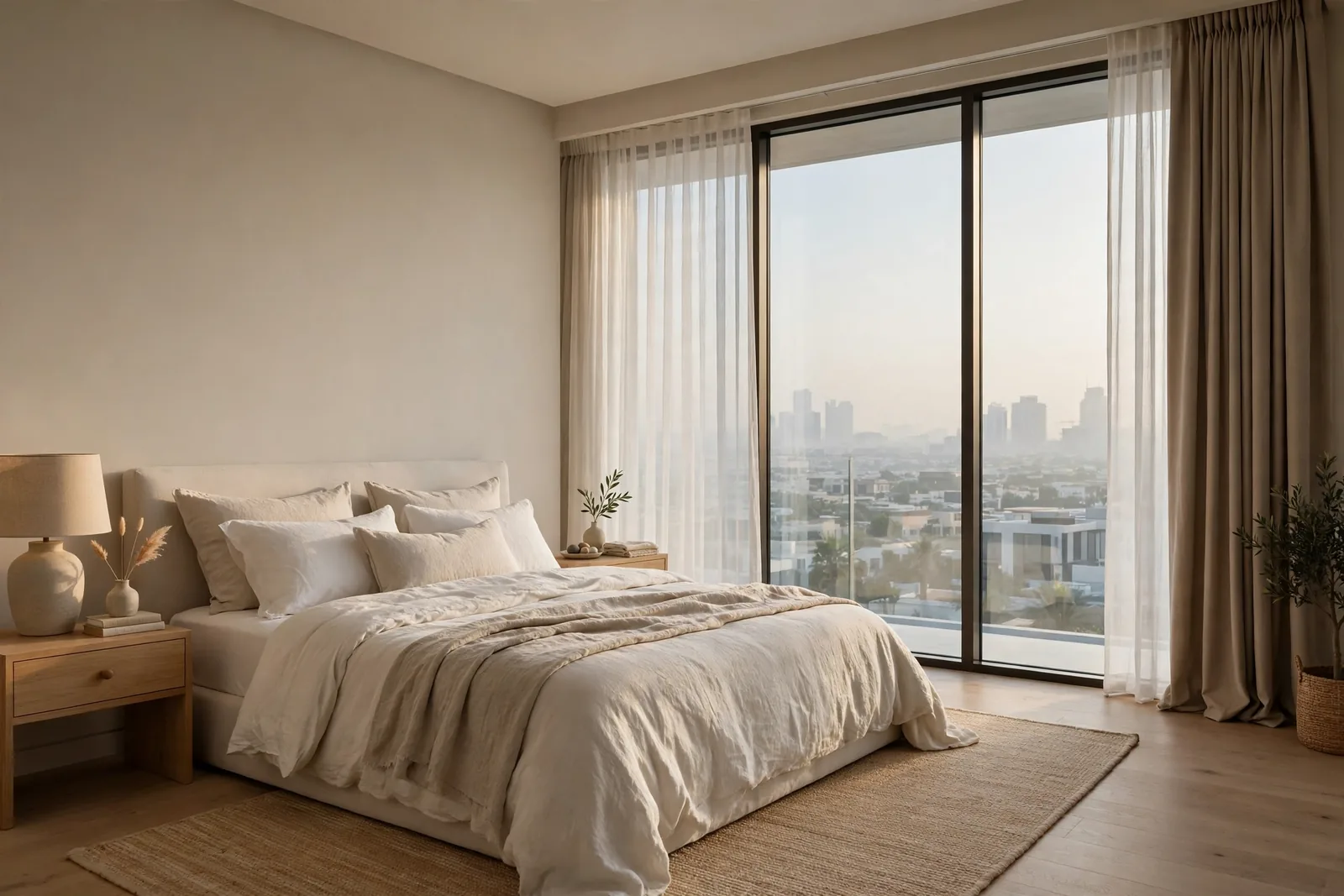
On large villa windows, the standard answer is two layers on two tracks — a sheer and a heavier curtain — because no single fabric can do both halves of the day.
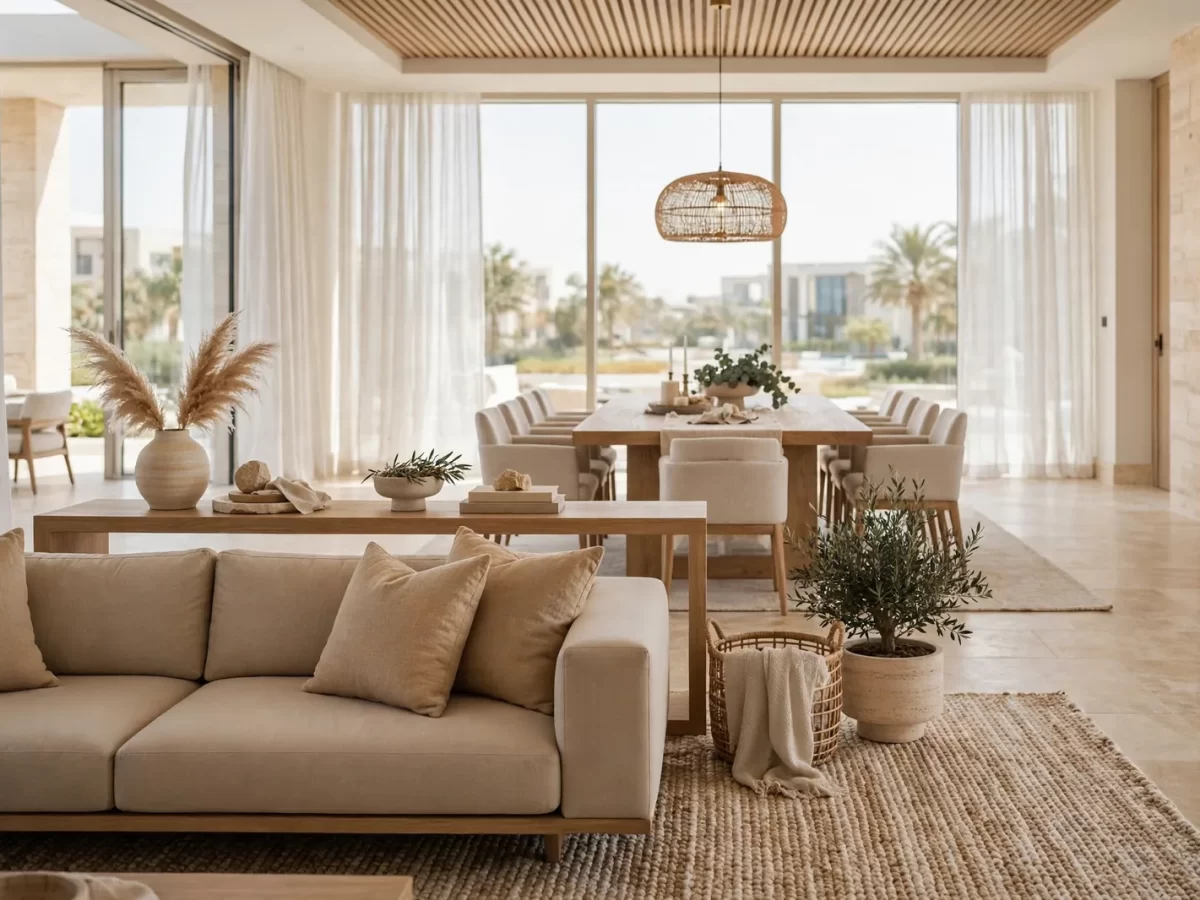
- The sheer is the daytime layer. Drawn across the glass, a voile or linen-look sheer diffuses harsh daylight into a soft, even light, cuts glare on screens, keeps the garden view present rather than blocked, and gives real privacy during the day, when it is brighter outside than in. It will be closed for most waking hours, so it has to be the layer you enjoy looking at.
- The lined or blackout curtain is the night and heat layer. It closes the room down after dark, darkens a bedroom for sleep, and — closed against a hot afternoon — puts fabric and still air between the sun and the room, so the air conditioning is not fighting the glass alone.
Two honest limits matter, because they are where expectations break. A sheer gives daytime privacy only: at night, with your lights on, the room is visible through it — night privacy always comes from the second layer. And a sheer alone does little against heat; if afternoon heat is the problem, the answer is the lined layer, not a denser sheer.
The track decides more than the fabric does
Most large-window curtain failures are track failures. The rules that matter at villa scale:
- Fix to the ceiling, or into a recessed ceiling channel. A ceiling-mounted track runs the curtain from the full height of the room, covers the top of the glass where light otherwise leaks, and reads as architecture rather than hardware. A shallow ceiling recess built for the track hides it completely — worth planning while ceilings are open.
- Run the track wider than the glass. Curtains need somewhere to go when open. Extend the track beyond the window on both sides so the stacked fabric sits against the wall, not over the glass — otherwise you permanently lose the edges of the window, and daylight with them. The wider and heavier the curtain, the more stack space it needs.
- Use a continuous track that the heading can travel. Wide spans need support, but ordinary centre brackets block many headings from passing. A proper ceiling track or traverse system lets a pair sweep the whole width without a dead stop in the middle.
- Respect the weight. A floor-to-ceiling curtain at two times fullness, with lining, is a heavy object that will be moved thousands of times. Tracks, fixings and — on a sliding door wall — the clearance between the curtain and the door’s travel must be planned for the finished weight, not the fabric sample.
Tracks, recesses and motor power are far easier to get right while a room is being built than after it is decorated — window treatments belong in the fit-out conversation early, alongside the ceiling plan and lighting.
Heading and fullness: where the luxury actually is
What makes curtains on a large window look expensive is rarely the fabric’s price. It is the evenness of the folds and the generosity of the cloth. Two headings dominate modern villa interiors: the wave heading, which forms regular, soft S-shaped folds on a dedicated track, stacks compactly and suits wide, contemporary glazing; and the pinch pleat, a tailored, more formal fold that takes more fabric and stack space, and suits classic rooms and formal majlis-style spaces. Eyelets are a poor choice at this scale — the rings cannot pass track supports, and the fold pattern breaks down over a long drop.
Fullness is the multiplier between track width and fabric width, and skimping on it is the commonest false economy in curtains. As a working guide, a main curtain typically needs around twice the track width in fabric to fold properly when closed, and a sheer usually needs more — roughly two to two-and-a-half times — because its lightness shows every missing fold. An under-filled curtain pulls flat across a large window and reads as a sheet, however good the material. The drop matters too: measure from track to floor at several points (floors and ceilings are rarely level), and finish the hem just above the floor — long enough to keep the unbroken vertical line, short enough not to drag or foul a sliding door.
Fabric that survives Dubai sun and dust
A large south- or west-facing window is a hard place for fabric to live: ultraviolet light works on it all day, and fine dust settles into every fold. Choose accordingly:
- Face the sun with the right fibre. High-quality polyester and polyester-blend fabrics — including convincing linen-look weaves — generally hold colour and shape in strong sun better than pure natural fibres, and wash and re-hang well. Pure linen is beautiful, but it can relax, move in length and fade unevenly behind glass in direct sun; reserve it for shaded windows, or accept it as a lined, looser look.
- Line the main curtain, always. A lining protects the face fabric from the sun, gives a long drop the body to hang in even folds, and improves how the curtain closes against heat and light. For bedrooms, specify a true blackout lining — and remember blackout is an installation, not a fabric: it needs the centre overlap where the pair meets, returns closing the sides to the wall, and a track set high and close enough that light does not pour over the top.
- Plan for dust. In Dubai, curtains are cleaned more often than in milder climates, and large curtains are heavy to handle. Fabrics that tolerate regular cleaning, on a track system that can actually be taken down and re-hung, will still look right in year three — not just in the handover photographs.
Colour follows the room’s palette rather than leading it: pale neutrals keep a large dressed window feeling airy, while a deeper tone can ground a very bright room. Either way, judge a large sample hanging at the actual window, in morning and afternoon light — the testing discipline in our guide to choosing interior colours for a modern villa applies to fabric exactly as to paint. In an open-plan ground floor, run the curtains as one continuous treatment across the glazing rather than changing fabric at each zone — zoning should come from rugs, furniture and lighting, as our guide to open-plan villa design explains, while the window wall stays calm and unified.
Motorisation: genuinely useful at this scale
On a small window, a motor is a luxury. On tall, wide or heavy villa curtains it is often the practical choice: double-height glass no one can reach, a long wall of curtains that should move together, and bedrooms where blackout only works if closing it is effortless every night. Motorised tracks can also be scheduled — closing the west-facing layer before the afternoon sun arrives, for example. Two points decide whether it works well: the motor must be rated for the finished curtain’s real weight (fabric, fullness and lining, with headroom to spare), and power must be provided at the track while the room is being built. Raise it at design stage; a motor retrofitted after decoration, with surface wiring, rarely looks or runs as well.
A short room-by-room summary
- Living room: sheer plus a lined curtain, wave heading, ceiling track — softness and glare control by day, a closed, private room by night.
- Master bedroom: sheer plus a true blackout installation with overlap and returns; motorise it if the window is wide or high — a blackout curtain that is a chore to close will stay open.
- Double-height entrance or stair window: a sheer alone is often right — it softens the light and keeps the architecture visible — motorised if it will ever need to move, because no one reaches that track with a ladder as routine.
- Majlis and formal rooms: the same two layers, with a pinch-pleat heading and a richer fabric where formality asks for it; privacy from the street is usually the deciding requirement.
Large villa windows deserve curtains specified with the same care as the joinery or the lighting: layers matched to the orientation, a track that lets them travel and stack properly, generous fullness, a fabric chosen for sun and dust, and blackout treated as a whole installation. Get those right and the curtains disappear into the architecture — the light simply feels softer and the room calmer. You can see how complete villa interiors come together across our project portfolio, including our Al Barari Villa project.
If you are planning a villa interior in Dubai or elsewhere in the UAE — a new build, a renovation, or a single room of difficult glass — and would like the window treatments designed as part of the whole scheme, Space & Design Interior Decoration LLC can help. Design With Purpose. Built With Precision. Tell us about your home via our contact page and our team will discuss the right next step.